Bob Breaks Through – Forging New Paths for others to follow

I wanted to write about Bob as soon as I heard that he had succeeded in cutting red tape, or as people in the environmental field affectionately call it, green tape, leaving a pathway open for others to follow. While writing about administrative hurdles doesn’t make for the sexiest of literature, this tale is in no way short of miracles, the kind of small miracles that can be counted fish by fish, drop by drop.
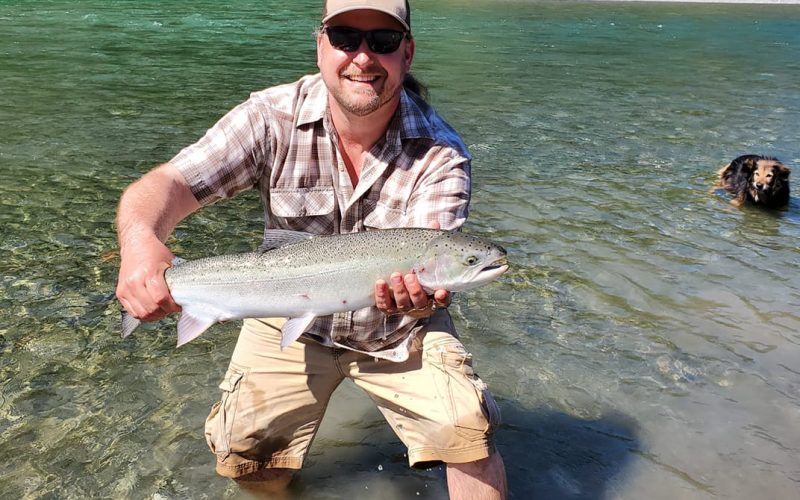
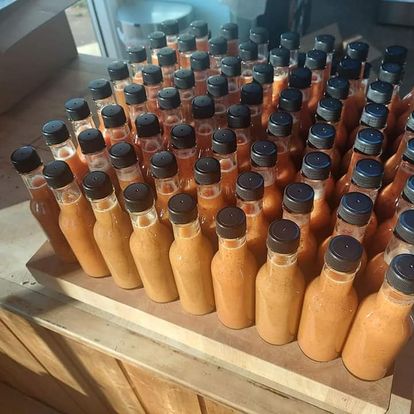
Bob has a huge heart, piercing blue eyes, and a recognizable gait. He wears cargo shorts and button-ups, and a baseball hat with a ponytail trailing behind him. Even when he’s not hugging you, there’s a way his arms seem ever-ready. His bigness of heart, combined with his focus and acuity make him a veritable powerhouse. Not one to sit around, he is a family man, loving husband, devoted dad, and a hot sauce brewer, a.k.a. “chili-head.” Each season he grows chilis in his garden, smokes them, and whips up his famous hot sauce which he barters and sells to friends and family alike.

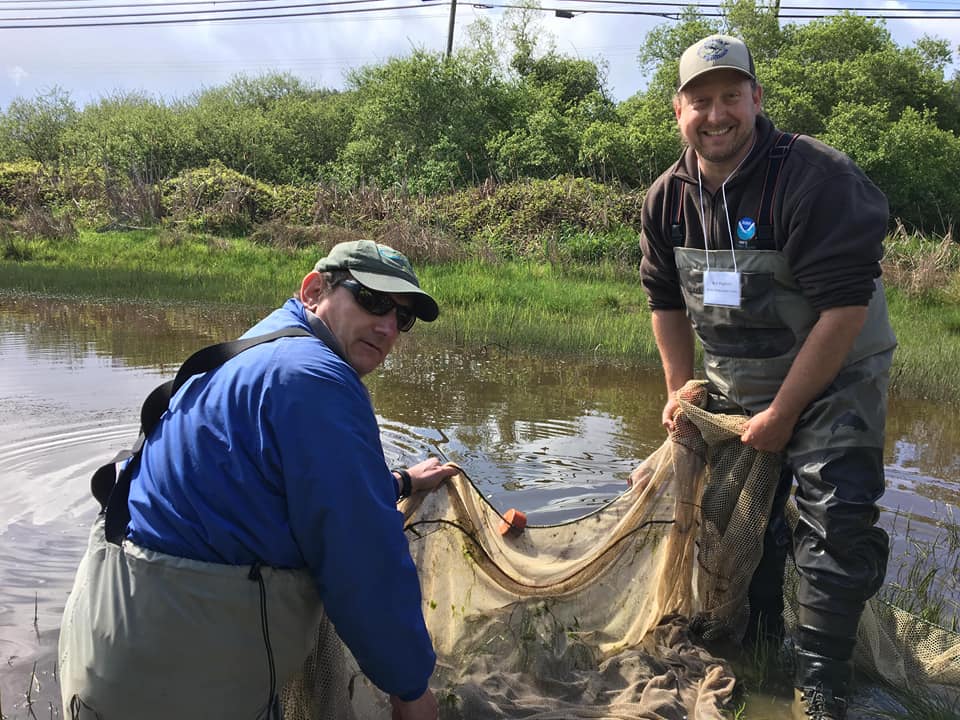
Some people seem like they were born with an extra battery. Bob is that guy. When he’s not sleeping, he’s awake, passionate and active. A big laugh and a mischievous sense of humor, he’s likable. But if you are a sneaky or deceitful type, Bob might be unnerving. While he’s got a lot going on in his life and career, when he’s with you, he’s paying attention.
He grew up on the east coast, in Trumbull, Connecticut and found his way to the North Coast after college. His older sister lived in Arcata and when he came out to visit he “fell in love with the place.” In 2001, he packed up all his stuff and moved out.
Joining AmeriCorps and Making the North Coast Home
Within a season, he’d found his way to the AmeriCorps Watershed Stewards Program. He was placed as an AmeriCorps volunteer at a salmon-centric site. Bob explained that Federal agencies are tasked with keeping tabs on two different categories of fish and wildlife: the “threatened” species, and the “endangered” species. Salmon are both, depending on location and species. Together the federal agencies work toward protecting the species, which includes their habitat, along with the state, many different non-profits, and local tribes.
Bob was placed at a site run by the CA Department of Fish and Wildlife. He had majored in Forestry and Geology at UMASS Amherst, but had never taken a “fish class.” He started learning about salmon and was immediately hooked, ahem, enthralled.


One Salmon Study – Two Discoveries!
“In that program I’d do salmon habitat surveys and spawning surveys, counting the salmon on their return from the ocean, or on their spawning journeys.” He also taught kids about salmon habitat through the educational aspect of the AmeriCorps program.
The second year of the program, he got to be involved in what turned out to be a pivotal scientific study. Using passive integrated transponders, aka “PIT tags”, they were able to track salmon and discover never-before-known behaviors. “We learned that female fish build multiple redds (salmon egg nests), which we didn’t know. Everyone thought female salmon built one redd, and that there was one female and one male per redd,” sort of a classic nuclear family structure. Quite the contrary! The females could make up to several different redds, and it is not uncommon to see a female fish create a redd and have as many as nine different males come visit said redd to fertilize the eggs. In Bob’s words, “Female salmon sometimes are making multiples, we don’t know why. We’ve documented them laying eggs in a redd, and then looked into another tributary and found the same female laying eggs in another redd with a different group of males fertilizing those eggs.” Wowzers! These ladies get around. The motives could include genetic diversity, increased chance of offspring survival in different habitats, even a sense of adventure?
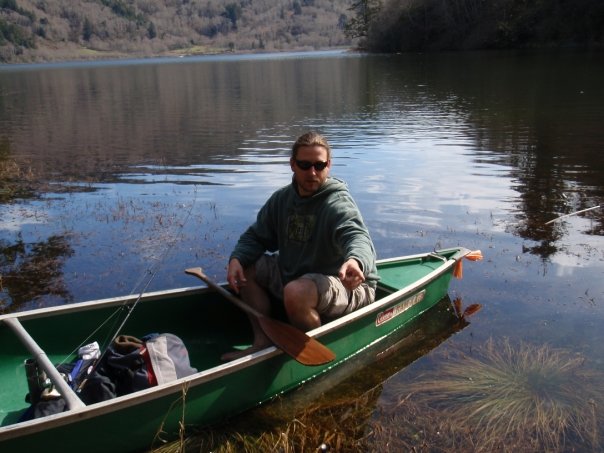
On this initial AmeriCorps project, there was yet another mind-blowing discovery, this one occurred through using fish traps at bottom of the watershed. Bob explains, “We’d collect scale samples, genetic materials and put PIT tags in the adult fish at the trap. In the fish trap you’d have to crank up this floor to see what was in there, and then you’d see juvenile fish, tons of fish! The juveniles stayed around the bottom of watershed for upwards of a year until they were ready to go to ocean.” Sort of analogous to the juvenile fish taking a gap year… They may appear old enough to leave the nest, but not yet ready to brave the wide open seas.
“This type of information is important because we can’t possibly protect a species without knowing where it lives, how and where it reproduces, and the true lifecycle.” In this single study Bob participated in early in his career, two major discoveries occurred. You can see how exciting this would be to be a part of, right out of the gate, “I loved it so much!”
Even in his initial interview with AmeriCorps, Bob was asking questions and trying to figure out how it all worked.
He asked, “Why are there so many organizations all trying to do the same thing? The tribes, state agencies, federal agencies, and non-profits all doing projects with the same goal: restoring rivers, protecting threatened and endangered species?”
Much has been written on having many different agencies and organizations working toward the same goals as a means of preventing corruption, especially when it comes to receiving government funds. Less research has been done on the ways overcomplicating processes increases costs and slows things down to the point of inefficiency. Many people have heard the phrase “bureaucratic bloat” but rarely is that phrase grounded in actual realities of people on the ground attempting to achieve positive change, whether that be building affordable housing or restoring rivers for salmon.
When Bob started out you needed nine permits to do a river restoration project:
- A Department of Fish and Wildlife (CDFW) 1600 Permit
- A CDFW CA Endangered Species Act Permit
- Then a CEQA, which stands for the California Environmental Quality Act
- A water quality permit 401 permit
- An Army Corps of Engineers (USACE) 404 Permit
- ESA – Endangered Species Act – Consultation for National Marine Fisheries Service species (NMFS)
- ESA for US Fish and Wildlife Species
- County Grading Permit
- NEPA – National Environmental Protection Act Permit
- Coastal Commission Coastal Development Permit (if in the coastal zone)
He thought it was “absolutely ridiculous.” When I first joined AmeriCorps you had to write something down that you’d like to learn or do by the end of your term. First week on the job and his long-term trajectory was already clear…
On his little piece of paper, he scribbled, “I want to make fixing rivers a lot easier.”
Twenty years later, Bob has not removed all barriers to making it “easy” to restore rivers, but he’s made a dent. Anyone who knows the ins and outs of government permitting processes knows that making a sizable dent is a huge accomplishment, and a task only completed by those with a very high frustration tolerance.
Slow and Steady Progress in River Restoration, Permit Streamlining
As Bob got into the details of what was involved in each permitting application process, it is safe to say he uttered the phrase, “Wow this is crazy,” more than once. He explained, “It takes a lot of front-loading to succeed….there’s a huge learning curve when it comes to getting projects approved.” After he’d done it for a couple of years, he got to know the list by heart, and the applications became more and more familiar, but you still had to identify what each party was looking for in their individual permit in each project proposal that crossed their desk.
One of his most apt phrases was “the permit is just the piece of paper you get to begin the actual real work of helping fish the river.”
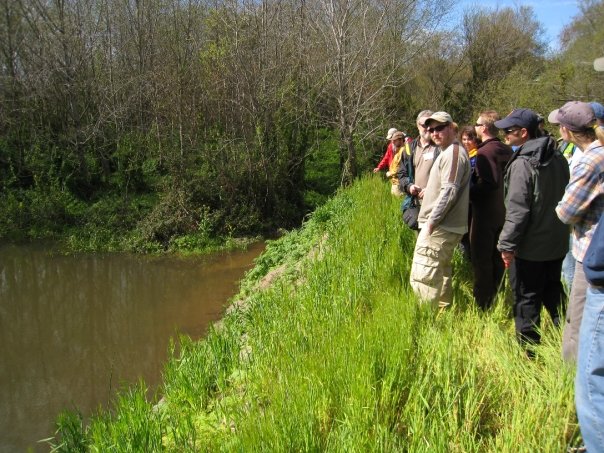
I was struck by the similarity between the process of getting a permit to help restore a river and the process of permitting a construction project. The fish in the river don’t know that there are organizations with reams of paper being printed, or emails sent and forwarded, money, time, eyes on words on paper, hundreds of hours, thousands of dollars, while nothing is changing. That’s all a world apart from the rush of the water, the trees above, the sun shining or the rain falling. It seems to me that the unhoused and housing-insecure masses of our nation are sort of like those fish in the river, hoping that homes can be built, or garages converted into studios, so that they can have someplace warm and dry to live. Just like the fish need logs in the river to provide them safe spaces to spawn, humans need shelter as well.
Bob’s work led him to get a job with National Oceanic and Atmospheric Administration Restoration Center in 2009 working in the restoration field in Arcata on the restoration projects. By the time he was working on these projects, someone had gone through the process of writing all the grants to get funding and the nine permits required.
One of the greatest obstacles is that the reasonable staff person you’re working with to get these permits through may have different interpretations of the law.
Some “regulators that were born to be regulators, they’re basically ‘No Machines.’ While some are forward-thinking solution-oriented people who want to do the right thing, while still protecting the things they are supposed to protect.”
Bob was lucky enough to find a program that had done the prior work to streamline the process a bit through “conversations happened before my time.” Bob came in 2009 and used their streamlined process as a model. He saw “a huge need so I started working with regulators in our agency that we have an obligation to consult with, to make sure our project won’t threaten species.” He worked for about a year and a half with USACE, CDFW and NMFS, wrote out all project descriptions, including the size and scope, detailed best management practices, and defined a geographic area where it would be valid.
None of this work was within his job description. It was a passion project that he knew would benefit restoration. In 2012, Bob was able to put into practice a way for people to apply and get projects approved that eliminated 2 of the 9 permits required, essentially combining three permits into one.
The typical permitting process from the day of submission through the moment National Marine Fisheries Service determines they have enough information starts a 135-day clock to write a biological opinion. In order to write that biological assessment and subsequent biological opinion, a consultant must be hired and it generally costs between $15,000.00 and 100,000.00, which comes out of grant program funding. Not to mention it is common for it to cost thirty to forty thousand dollars in staffing time to write all of these permitting applications. All that money is going to permitting is not going into restoration on the ground. Time-wise, the process takes a minimum of four and a half months, often up to twelve to eighteen months.
Now, Bob can reviewing an application in “about ninety minutes. I got one two days ago. Should be able to turn it around in less than a week, often faster.”
This streamlined program started in Santa Rosa and has now is available to restoration practitioners throughout the entire state as we completed these efforts in Arcata (2012), Sacramento (2018) and Long Beach (2015). A white paper estimating the cost savings of these programs was developed and has saved the taxpayer ~$6 – $16 million since 2006. Building off of these efforts, Bob and his team have developed additional streamlined permitting programs throughout the state including a programmatic approach for USWFS species and projects that need Coastal Commission Permits in the coastal zone, saving more time and money for the restoration practitioner and the taxpayer.
I asked if this monumental change has been recognized in some way. He nodded and said casually, “Yeah people love it… gotten some awards.”

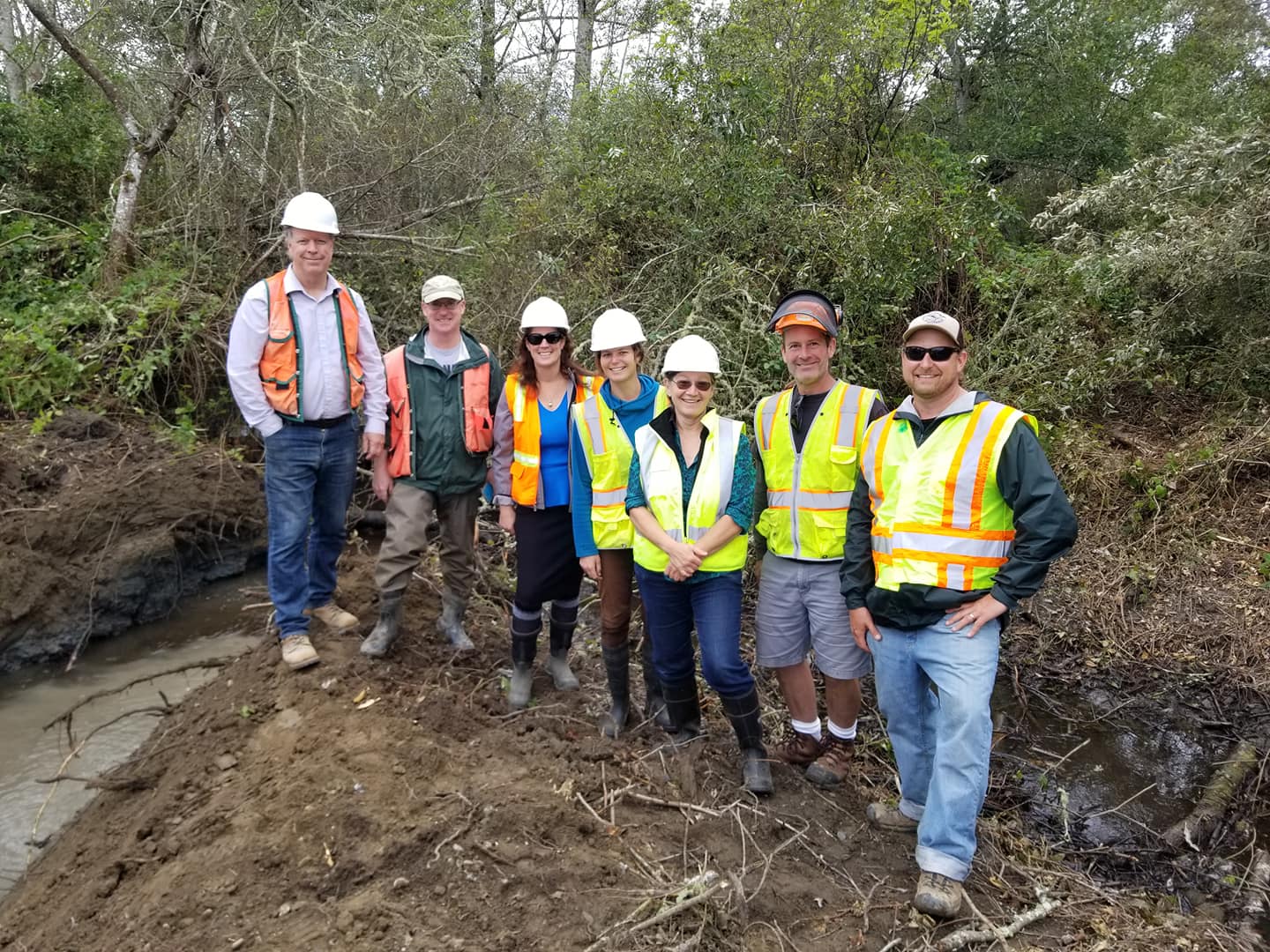
With all my hullabaloo and enthusiasm for removing obstacles, Bob maintained a steady, long view. “These agencies have laws on the books for a good reason. The clean air act of 1973 makes it so you can breathe.” Then he paused and noted, “It can become overly burdensome. Certain projects are such low risk…it would behoove the different agencies to figure out ways to meet the statutes while also making it easier for people who are trying to do good.” A large complex project such as the Klamath Dam Removal Project is a riskier project that will likely have several short-term adverse effects on the species we are trying to save and need to go through the regular permitting process. Simple projects, like adding wood to a stream, planting trees and removing fish passage barriers, have less of a chance to harm species, especially since we added all of the best management practices, and can be permitted through the streamlined process.
It is worth noting that structurally it is far easier to pass a new law, regulation, or ordinance than it is to remove or modify an existing one. This explains how we got to nine required permits for a stream restoration project, or the lengthy, costly, sometimes circular process of permitting new or renovated housing. It is rare and exceptional when someone can reverse the overburdening of people attempting to create a habitat for species to thrive in, whether coho salmon or homo sapiens.


As is customary, I inquired as to Bob’s peak moment of 2022. He said, “Number one, I coach my daughter’s little league baseball team and they were down 8 to 1 but came back to win 9 to 8 in the 6th inning. The other brought me to tears, running a crew of fifty volunteers for the last Kate Wolf Festival. On the last day, they all dressed up like me and told me how much they love me and how much miss they’ll miss the festival.”
Written by Jade Raybin, Realtor on the North Coast @ 707.684.6737