
Hiring Help for a Home Renovation
I know working with contractors seems scary! You’ve heard the horror stories from your friends and you really want to have a good experience with home renovations. After 15 years of experience in real estate, designing and building home renovations for return, I’ve come across some ways you can save yourself money and time by avoiding costly mistakes and massive headaches.

Check out These Do’s and Don’t When Working with Contractors
Do Ask Them What They Like to Do
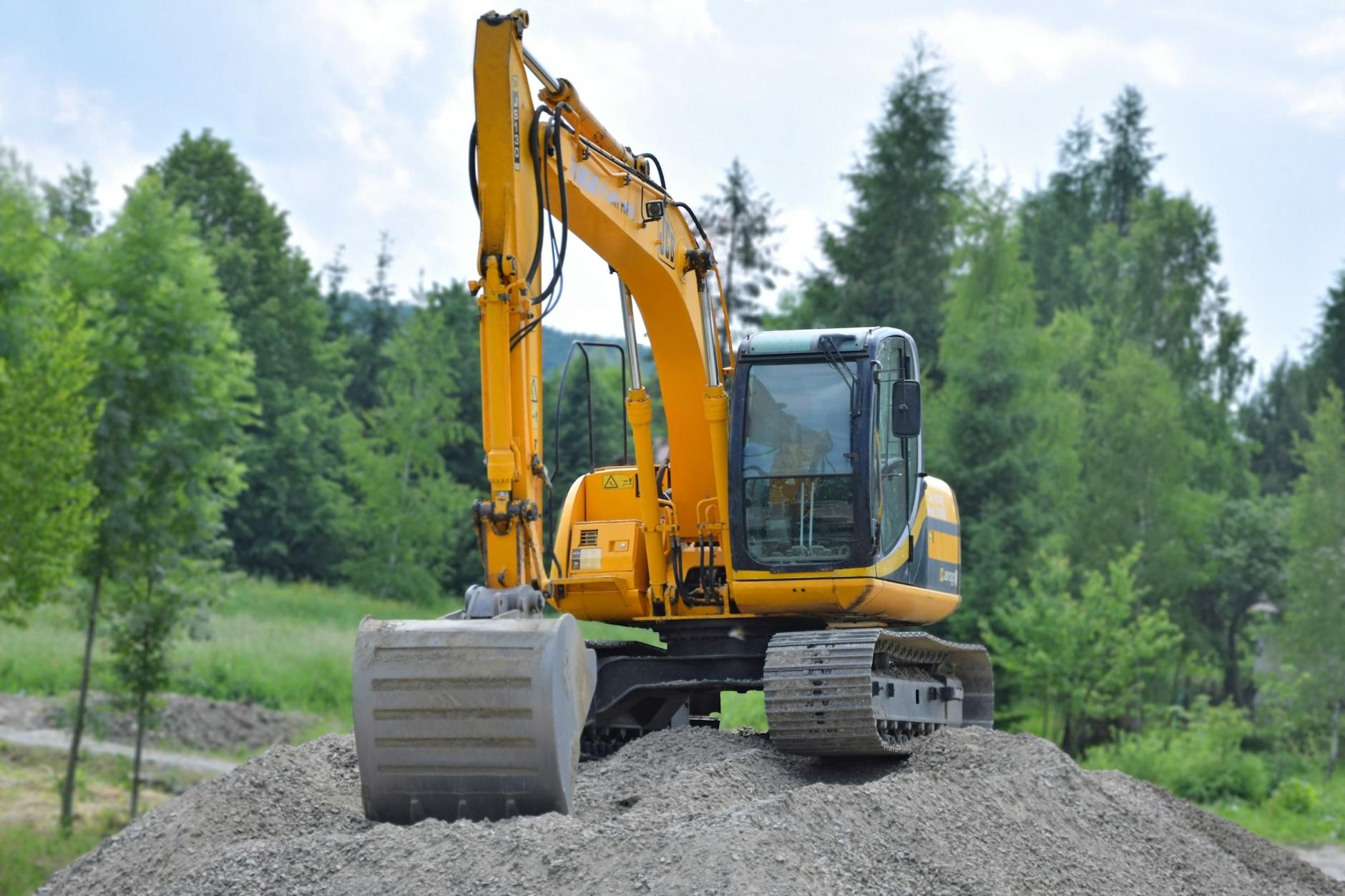
Most contractors have certain aspects of building they enjoy most, or specific types of builds. The experienced general contractors that are mid-size or bigger will have subs or employees that they can have do more of the work they don’t love. I’ll never forget asking a contractor what he liked to do and he said “Stuff that’s gnarly. I like it when it is hard.” He was excited to build a three-level house on a slope, or a large treehouse, or a curved moon structure. That’s what excites him, and he wants the challenge. I won’t hand that contractor a run-of-the-mill bathroom remodel. There are times he might have a gap between jobs and need the work to keep his guys working, and those are his exceptions.
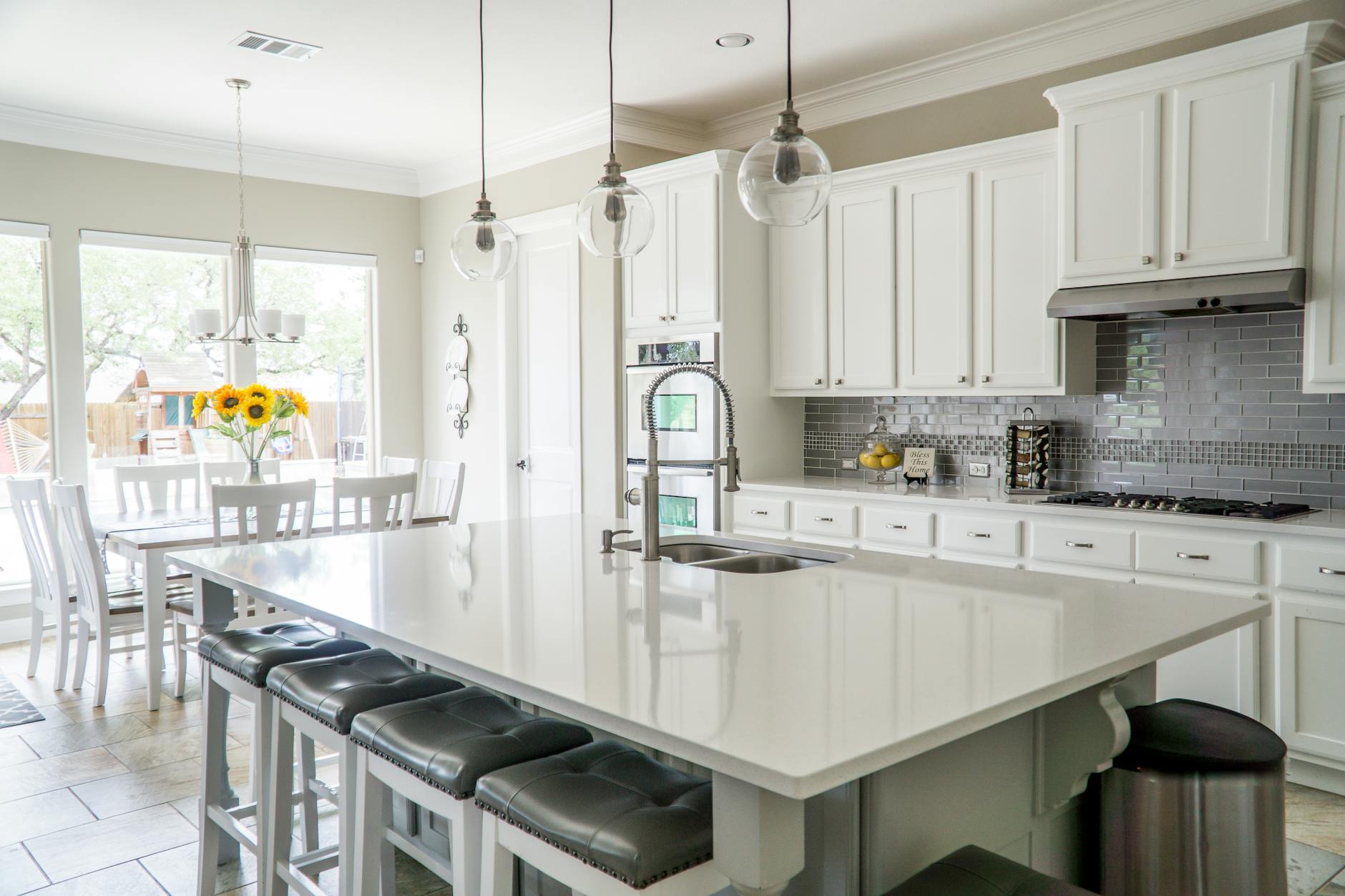
Another contractor I know loves complex foundations and earth work best of all. He does not enjoy high-level finish carpentry. He may employ a guy who can do that, so his construction company may still do a great job at all aspects of the build in the end. All that said, his favorite thing will be redoing the foundation of a beautiful old house that’s falling down a hill. In general, you will get the best results when they like doing the kind of job you need done. As you may know, many specialize. There are excavating contractors, painting contractors, and electrical contractors in addition to “general contractors.” Concrete, plumbing, roofing, landscaping, and HVAC are also common types of subcontractors.
Do Check References
Yes, that means asking for the names and numbers of past clients and calling two or three of them. Yelp reviews or Angie’s list or Google reviews also work as ways to verify this contractor has gotten the job done in the past – and well. Ideally, they have a great website that showcases all of their work, but that is not necessary. You may get a slightly better rate with folks who aren’t quite as good at administrative elements and marketing. As in the art world, self-promotion and technical skill are two separate and non-correlated skills, so online presence only goes so far. Pictures of past jobs help too!
Do Get Plans Drawn
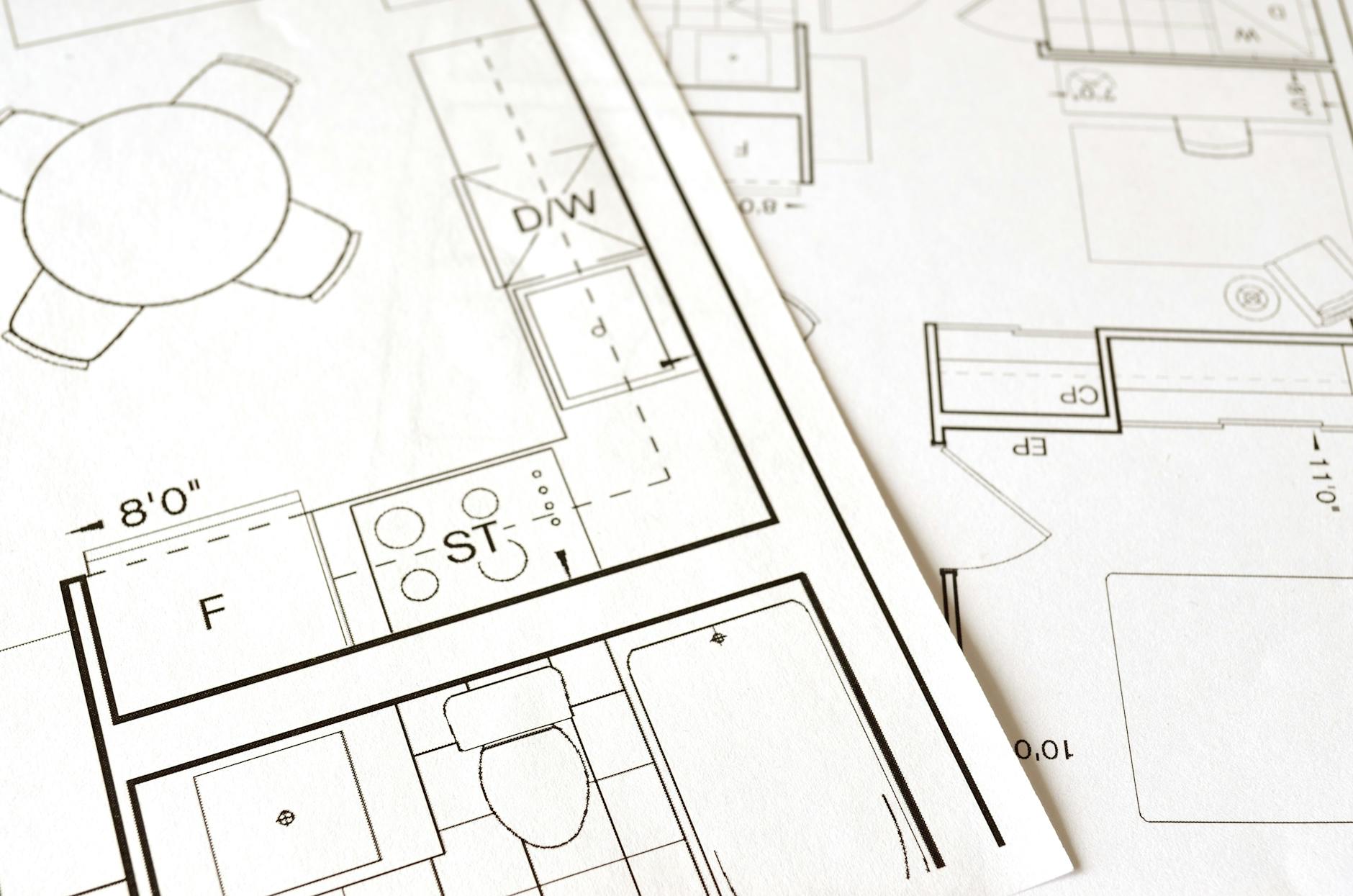
The great thing about plans is that they include measurements and details that essentially form a contract between you, the client, and the builder. This way, when things come up, you can refer back to the drawings. Say for example you don’t think it was done to the specs, the drawings allow you to confirm. If things are going into place and you *don’t* like how they look, you can then do a change order and shift how they look… The builder knows they fulfilled what you both agreed to, and it is clear you’d like a change. No arguing about what anyone said or agreed to – it is right there on paper.
If you’re replacing cabinets with the exact same casework and sizing, obviously there’s no need to architectural renderings or drawings. For smaller jobs, it may be that you can get out graph paper, treat each square as a foot, and look up the measurements of the vanity or oven you want and attempt to figure it out.
However, if you plan to do a new build, a new layout, or a down-to-the-studs remodel, it would greatly behoove you to have plans. Not to mention that bigger jobs require permits (some smaller jobs do as well, but that’s a different blog post). In order to obtain a permit, you’ll need drawings. One can also use online software to design such as Vectorworks, HomeStyler (a 3-D app) or SketchUp. Lastly, drawings in a lot of the architectural software programs help you visualize what it will look like, including light studies that show how the sun will move through the room at different times of day.
Do understand that the process may take longer than expected.

Estimates are just that – estimates. Occasionally a job finishes early, but be prepared for the idea that if they estimate two months, it may be four – or more. If a job is estimated at two weeks, budget at least three in your head. I heard a saying once, “The good thing about a bad reputation is that you can only pleasantly surprise people.” One of the most common complaints you hear about construction projects is that they take too long. Perhaps it can help armor you against disappointment to build in an expectation of twice as long as stated, or if there are materials, design pivots, or permitting delays.
Do pay them on time, but on a graduated schedule
The payments can be specific to elements of the project being completed. This ought be included in the contract. For some projects it will be benchmarks of completion (i.e. the excavation for terracing has occured, before the rock walls are laid) for others it will be phased. For example, demolition is complete, and foundation and framing work are done. I’ll be going into greater detail on this and showing you exactly how to do this at my upcoming workshops: Beauty and Bounty: Designing Home Renovations for Return
For those who’d like to read more about the phases of construction projects this article is a great resource.
Do Listen to What They Say
If a contractor tells you it is going to cost twice as much and take four times as long to fabricate custom metal benches, versus building wood ones – believe them. You may still want metal, and you can pay for that if they’re willing to do it. It may be worth it to you. It may not. All the same, listen to their input on costs and timing, and any visual or functional awkwardness they foresee.
Do Meet their Right-Hand Person
Let’s face it, you may end up interacting with their foreman or crew lead a lot more than the GC themselves. It has happened many times on smaller jobs that a contractor comes out to meet me and bid a job and then I never see them again. Instead their “guys” show up and do the job. Where this creates difficulty is that there may be elements agreed upon between you and the GC that may not have been communicated to their foreman, and here you are trying to communicate this information after the fact. Communication and expectations are the trickiest aspects of the job (thus the importance of plans). All the same, on a bigger job, it is ok to ask to meet their foreman or lead members of their crew to feel out who they work with, and who might be in your home most over the next many months.
Be Nice to Their Staff
Yes, the person who answers the phone might be their brother, wife, or child. Many contractors have family-run businesses. If you’re impatient or unkind to any person who works under them, it will get back to the contractor. Everyone has bad days. If you need to, apologize. But never assume they won’t hear about it.
Do Plan Ahead
This means figuring out the design far in advance and completing the all ordering with plenty of time. Some of the best products take 6 weeks to arrive. Specialty tile can take 3 months or more, as it might be made and shipped from overseas. It may be that the cabinetry you want is in stock at a certain width, but ideally you’d have it four inches wider, and that is on a manufacturing delay. When we rush, it costs more and design choices are made for the wrong reasons. Furthermore, I’ve never seen a big job where not a single thing was missing, delayed, or forgotten. Materials delays are stressful and can cost you valuable time.
Do expect to pay for change orders/revisions.
Materials come and you don’t like the way they look together, or suddenly something looks smaller than you’d hoped, or too big, or the walkway through the space doesn’t feel how it should. Change orders happen. Design is not an exact science. Perhaps you can have fickle or perfectionist tendencies. Perhaps you took someone’s suggestion against your better judgement and you realize you just can’t live with it. The point is, change orders happen. It is ok. Yes, they do cost money. Be prepared that you may need a change order and that it may affect the project cost.
Don’t Do the Following
Don’t Stand Over Them While They Work
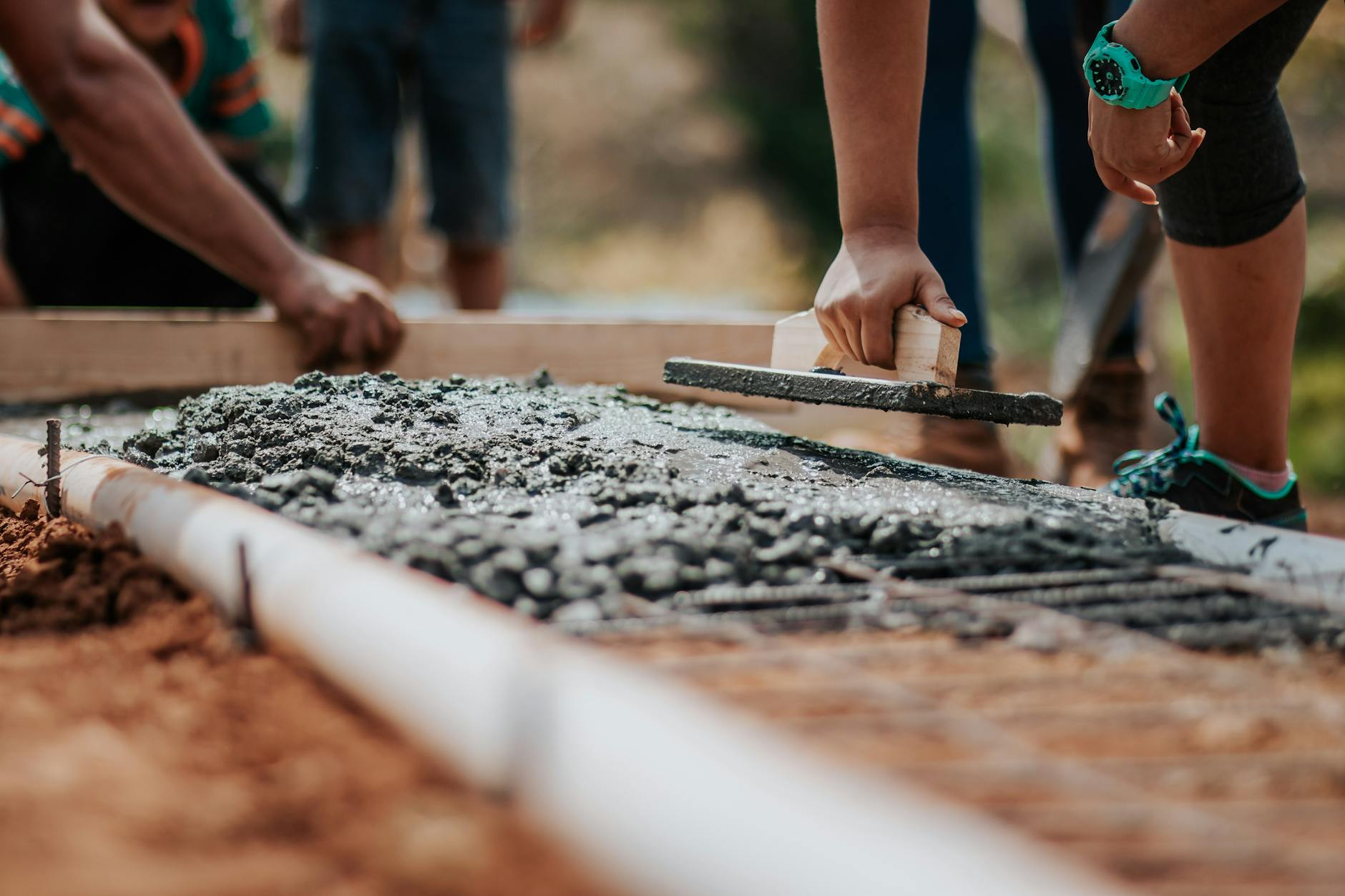
It’s difficult having your house torn apart, full of strangers. So whenever possible – vacate! Do you work from home? Not during construction! It’s hard enough to live in a construction zone, don’t try to take zoom calls with hammering and nailguns in the background. Don’t stare at them, or peer curiously at their tools. Attention and focus is a valuable resource, and most people in the trades enjoy getting into a good work flow and getting their job done. Don’t distract them with questions that can wait or hover. No one likes someone reading over their shoulder while they write.
Don’t Prepay
General contractors are only allowed to take 10 percent of total project cost up front, or 10,000 dollars. The initial phase is the most important, as you are building mutual trust. It matters that you pay them on time, but there are so many stories of folks prepaying contractors and then never seeing them again, or jobs being left incomplete. Highly intelligent people sometimes mistake prepayment as “greasing the wheels.” Everyone is motivated differently, but it’s almost always better to pay on a preset schedule related to stages of project completion. There’s lots more to say about structuring contracts and payment schedules.
Don’t Expect To Be Their Only Job

I’ve heard clients exclaim “They haven’t been here for days! They don’t even bother to show up! They’ve disappeared!” One of the most difficult things about the way the business is structured is that you are NOT their only job. If you were, that contractor would be out of business in no time. Contractors work contract to contract, which means they always have to bid and hopefully get the next job while working on the current one. Some will start several jobs so they know they have all of them and get them done on a slightly more delayed schedule than clients find ideal. In my upcoming workshop I’ll share the three-sided triangle of hiring a contractor that will help you prioritize and make a practical choice for who you choose to work with.
Another factor is that certain stages of construction require things to set or dry, other times the contractor is waiting on a subcontractor to come in before they can complete the next phase, ie. waiting for the electrician to complete the wiring before they put up drywall. It is a sequential process, and it can NOT be done out of order. I know it is hard to be patient as you may be living in a construction zone… No one wants that. No one appreciates being told three months and having something take eight months. As a general rule, I’ve heard the phrase, twice as expensive, four times as long applied to construction.
Most homeowners who try GC their own jobs instead of hiring a general contractor often end up paying more, and having a lot of delays, and problems. Much respect to DIYers! If you have the skill, time, and wherewithall to do the entire thing or close to it on your own, more power to you. For those who have jobs that can allow them to pick up more or less work, I do recommend estimating and tracking the hours you would spend overseeing, ordering, and planning renovations, and possibly doing parts of the job, as most of the time it may make better financial sense to hire a General Contractor do that work – even if there is a bit of sticker shock. Do you really want to be the one to run to Home Depot to get a different part in the middle of the day? A general contractor or one of their staff is already going to Home Depot…
Don’t Try To Be Their Friend

Professional distance gets you the best results. If you try to be their friend, you are NOT more likely to get work done faster or at a reduced rate. Don’t invite them over for dinner, don’t overshare, don’t ask too many personal questions. They are hired to do an important job. Professional distance with a lack of emotionality produces the best results in the end. I recall making hot lunches for and being very friendly and kind to contractors early on in my career. For some reason, that was my instinct and I thought it would somehow help. Once I went through the common cycles of disappointment, upset, and frustration at jobs being delayed or not done to my liking, or costing more than I was comfortable with/had agreed to, I realized the personal bonds I had formed with the contractors made me MORE upset, not less. It was clear any friendliness had NOT changed their work ethic, timing, or rates. For that reason, I had a sneaking suspicion I ought to pull back and maintain more of a distance. That tactic has produced far better results. We perform our best work as a professional. It is work, afterall. One could wax poetic and wager that befriending contractors makes them more likely to give you friend timing… I’ll get to it when I get to it, for example, or amplifies feelings of guilt when things don’t work out as well as hoped, and when there’s guilt, you better believe there’s avoidance. Psychology aside, be friendly, but don’t try to be their friend. After the job is done, and done well, and everyone is happy, that is the point you can try to be their friend, if you must. But it’s probably a better idea to NOT become their friend and just hire them for the next job.

Don’t Blame Them for Materials Delays or Subs Not Showing Up
Trust me, they want to get the job done too. Yes, they likely have either been told by their subcontractor the next date they can show up, or they’ve gotten on the phone to see who else is available. Part of their job – a BIG part of their job is keeping the ship moving forward, so trust they care, they’re working hard, and know they can’t manifest subcontractors out of thin air, or make an oven that’s stuck in Kansas City get to California faster.
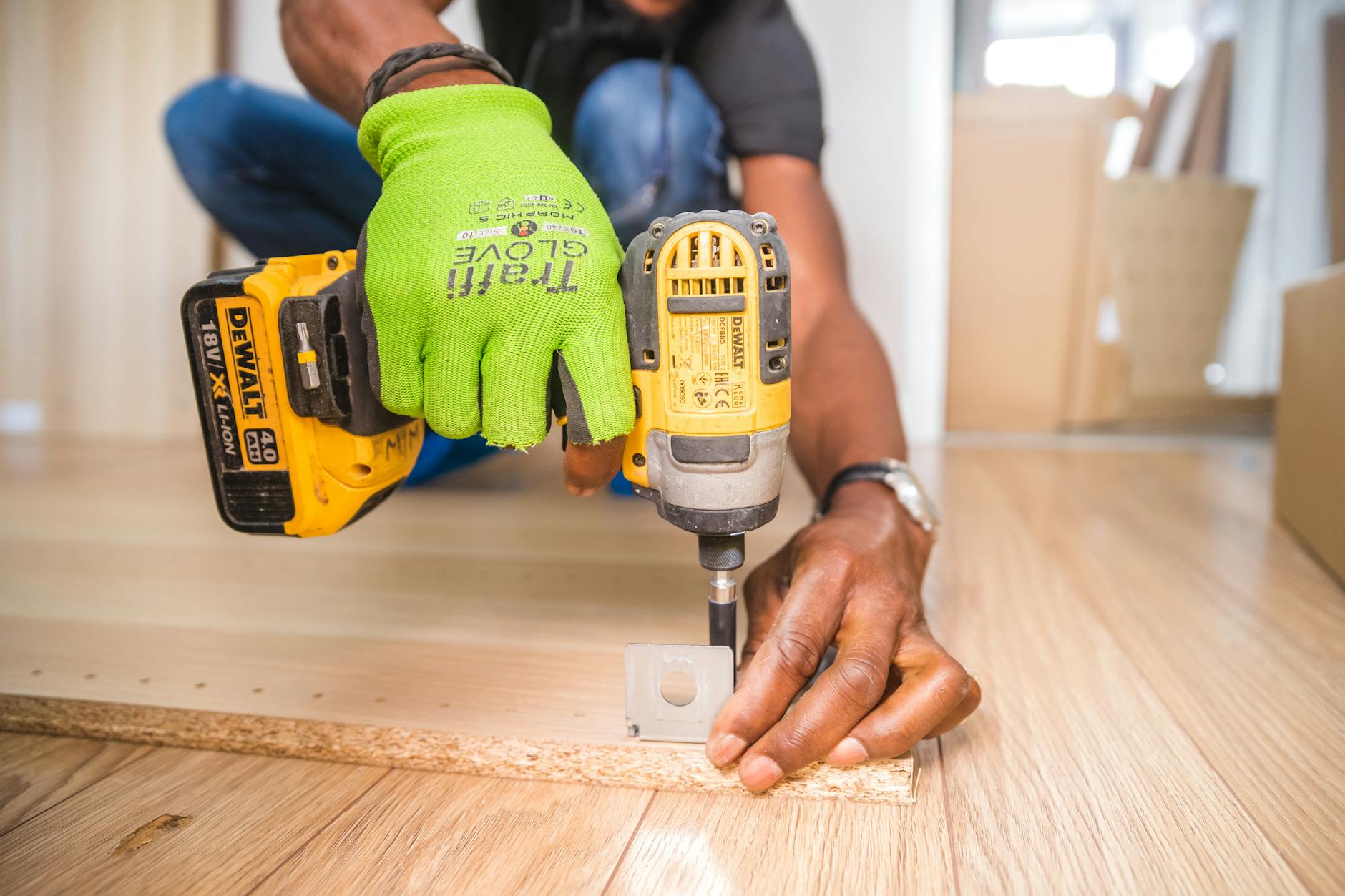
Would you like to learn more about this? Learn what’s essential in a contract? I’m covering all of this and more in my upcoming Bay Area Workshops BEAUTY & BOUNTY: DESIGNING HOME RENOVATIONS FOR RETURN I’d love to see you there!
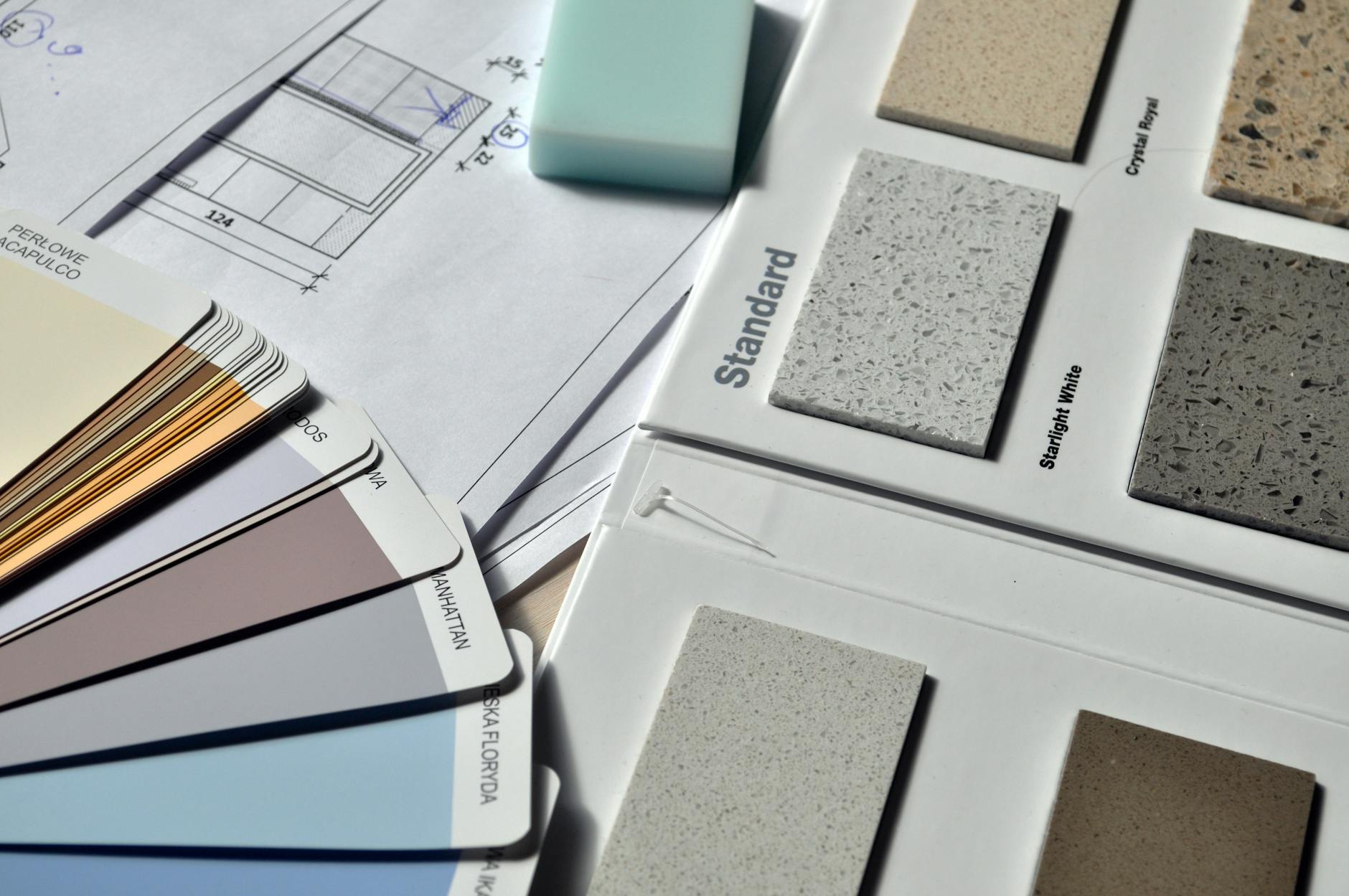
I’ll give you a cheat sheet of interview questions to ask when looking for a contractor, tips for meeting their crew lead, how to save money by planning ahead, what to do if a job goes sideways, and help you understand how and why bids come in at wildly different amounts!
Here are some comments from G.C.s that took a look at this article:
“You didn’t mention obtaining permits and whose responsibility that is.
I always tell my customers that we will be having a relationship that will last for the duration of the project- or beyond. Therefore, it is necessary that at the very least there is mutual respect, but also that they are someone you’re willing to have in your life. Hence, getting multiple bids. Sometimes it’s not the best price you’re looking for, but the contractor you have a good feeling towards.
Lastly, and I repeat: Contracts! The homeowner has the right to have the contract altered. It’s a negotiation. Without one, there is no accountability, no recourse, and no reference. This, I believe, is the most important element of the relationship.”
Another G.C. said “I like the Don’ts. It’s so hard cause every job is so different.”
Another mentioned, “Don’t think that you, the home owner, are going to get the same price on materials that the contractor gets. I truly think you get the best bang for your buck when you have a fixed price, all-in contracts that include materials, and labor.”