
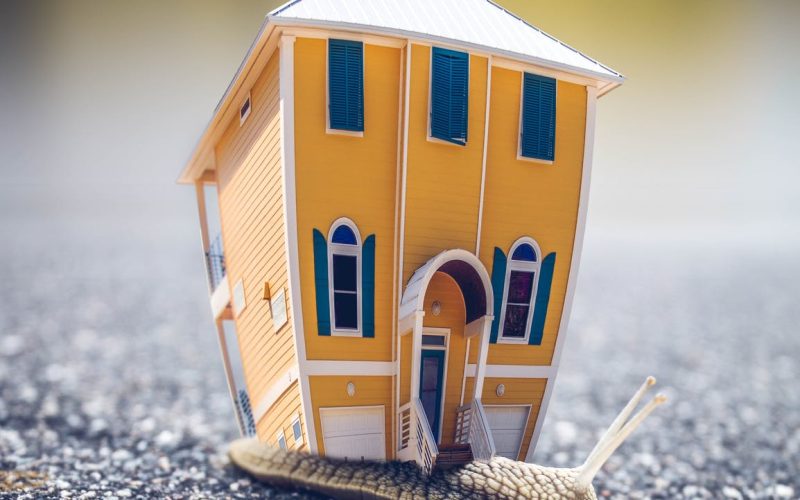
Comparing the Covid 19 Response to the Housing Crisis Response

When Sars Covid 19 occurred, we responded to it as an undeniable emergency.
We passed sweeping legislation and funded a multitude of programs in a matter of months. Whether or not you condone what was passed or how it was allocated is beside the point. What matters is that we, as a nation, took action. Big and Fast. Ambitious. A proportional response. The programs were generative, encouraging, and creative.
A crisis is defined not by personal individual tragedy, but by a million stories that come together to paint a bigger picture.
Bill from the bay who has worked playing organ for church on Sundays got his enhanced unemployment and was able to eat and keep afloat. Zoli from Salinas was authorized to get free medication, paid sick time off of work from his construction job, and a free vaccine. Ladonia from Palms received rent relief and a PPP loan and was able to pay her salon rent as a stylist, reopening her doors when the pandemic allowed. Mari had plenty to eat due to increased money on her parent’s food stamps and the addition of pandemic-EBT when school lunches disappeared. Elron used his stimulus money to pay down his credit cards and buy his daughter birthday presents. Navah’s virology lab received the funding needed to study vaccines and treatments for covid-19, and they were fast-tracked for approval when the data showed good results.
None of this would be true without swift government action to address the scope of the problem.
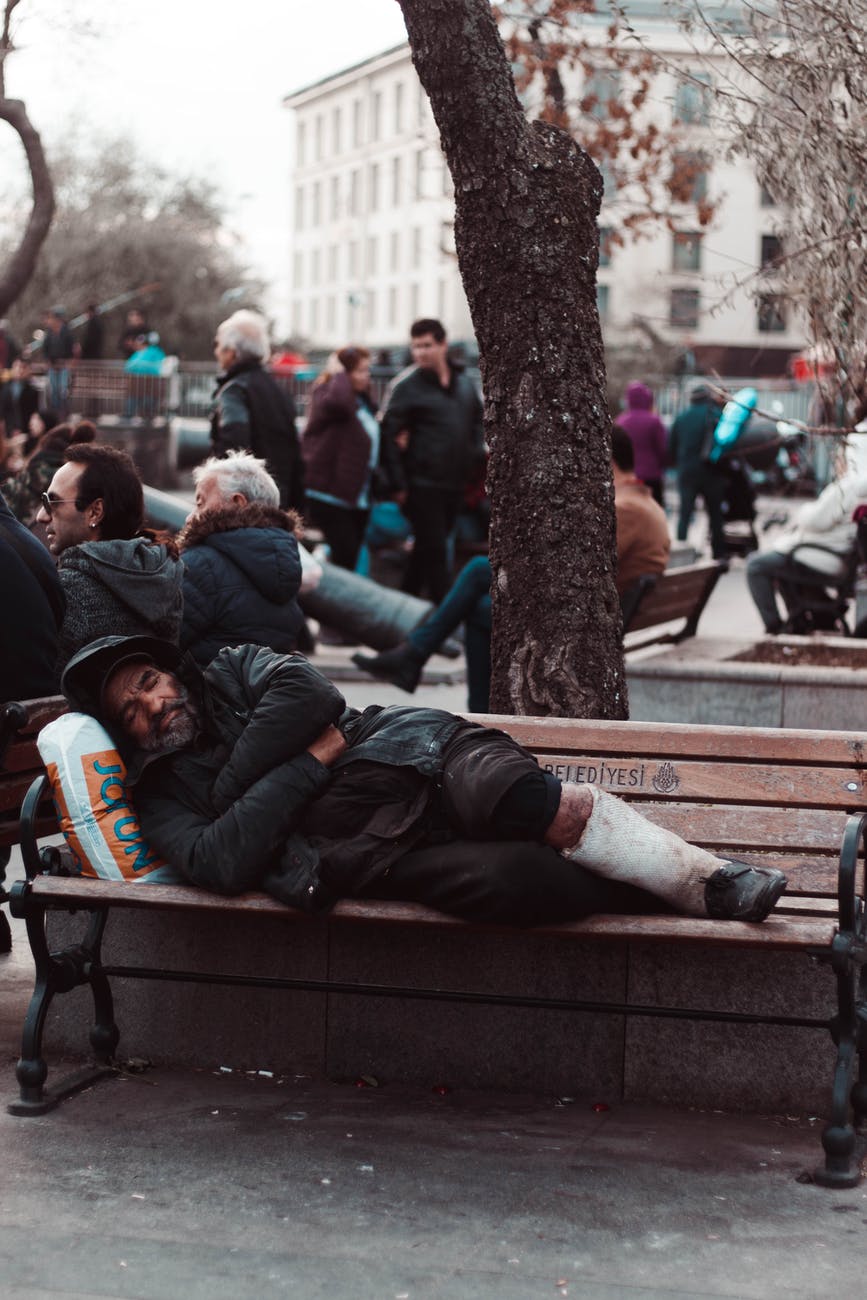
What if we treated being unhoused, at risk of losing housing, rent-burdened, or unable to find housing near one’s school or work like an immediate crisis, worthy of sweeping governmental action?
Jila the phlebotomist says “We can’t afford to buy.” Mark Anthony who works retail but lives in his car explains, “by the time I send an email, they’ve got dozens of people already, applying.” Jose who works in silicon valley says “My commute is about 90 minutes because there was nothing available closer.” Serena who lost work says she didn’t want to get evicted, but “couldn’t keep up.” Ilya the ballroom dancer in Los Angeles finds, “I don’t make three times the rent so landlords won’t take me.” Barbara encounters the fact that her “social security check isn’t enough to pay rent and the waitlists for senior housing are years long.”
Plenty has been written about the layers that influence how a person becomes and remains unhoused. There are real economic factors that cause the majority of new construction to be luxury condos (e.g. in major coastal cities the building cost per unit is upwards of 750K).

Instead of lamenting these market conditions, let’s consider an organizational and cultural shift that encourages and empowers lay folks, builders, politicians, homeowners, and anyone who wants to put down roots, to be supported, not thwarted, in their attempt to bloom where they are planted.
It has been said that change happens at the speed of trust. Nothing about covid 19 was about trust. It was about emergency.
We need 3.5 million units to catch up to demand by 2025*, and it’s quite likely demand is much higher than reported. Not only do we have over 100,000 unhoused people living in tent camps along our highways, but only 27 percent of Californians can afford to purchase a home. Our housing crisis, like our climate crisis, has hit an emergency point. Without real drastic immediate action, we are headed for increasing numbers of people living without stable, safe, sane housing options. (For the purposes of this article financial sanity counts… i.e. spending 2/3rds of one’s income on rent is effectively insane.)
Stable communities enable the health of a community. Relationships continue, children do better, folks are better able to form and create support networks and succeed in the things economists don’t track well: helping each other pick kids up from school, run food to someone after surgery, trade seeds, lend each other tools, etc. These sort of grassroots experiences of a place, the interwoven roots of a community, strengthen over time when people can stay where they want to stay.
As the housing market has gone haywire, and the pandemic has destabilized so much, more and more of us are migrating. Migration is in and of itself not a bad thing, but ideally we are not moving *because* of the housing crisis. If we want to choose a different lifestyle, that’s one thing. But lack of availability or affordability is an unfortunate reason to break up extended families and communities.
For all we’ve done with housing, so much of it has been punitive, regulatory, or restrictive. New green regulation is lauded as a success in the state capital, yet these new requirements significantly drive up the cost of construction. As an architect so aptly stated when asked about the role of the state, county, city as far as building, “It’s not their job to tell you what you can do. It’s their job to tell you what you can’t do.”
How did this happen? Why has it gotten so bad?
I’d be remiss if I did not acknowledge that the role of government when it comes to housing is to ensure safety and sanitation. The building department is there to make sure that residential and commercial buildings do not collapse or catch on fire, the sanitation department is assigned with making sure sewage stays a safe distance away from drinking water, etc… Zoning has a far more fraught history, but certain aspects can be seen as leading to public safety, i.e. zoning rules that place high toxin industries and power plants far away from schools and residential areas. It bears mention that this separation of housing from industrial polluters such as oil refineries tends to not be the case in poor communities, which is one example of environmental racism.
There are many factors, but three stand out as a toxic triptych: NIMBYs, Redtape, and Commodification.
NIMBYs (Not In My Back Yard) fight to stop development, pressuring and populating some of the city and county offices. They cause gridlock hell, and sometimes use lawsuits, as in the case of attempting to block ADUs in the coastal zone. Most say they don’t oppose development, they just oppose this particular project that happens to be near their house or in their neighborhood. I don’t believe humans are ever entitled to live in a world free of change. The root of NIMBYism is not only fear of change, and fear of the “other,” but ultimately a belief that one is entitled to have things stay the same, have their neighborhood change as little as possible. One might say to a NIMBY, did you know the population is growing? Are you aware that if we don’t create more housing, statewide, and yes, even in YOUR neighborhood that Ruby won’t be able to afford a home in this area even though she’s a school teacher for your grandkids and her husband chefs at your favorite restaurant in town?
Helen Fisher, a well-known Harvard anthropologist, has done extensive research into personality types, linking people’s attitudes and behaviors to their neurochemistry. She calls those who are driven by dopamine “Explorers,” for their risk-taking and out-of-the-box thinking. People who are linked most to the serotonin system she dubs, “Builders.” “Builders” tend to avoid risk, be cautious and conventional, seek and maintain stability. She posits both are entirely necessary for a society, and for human evolution. The explorers were willing to traverse the river, and even build a bridge to do so, or die trying. Builders keep what’s in place going, maintaining what has worked in the past. NIMBYs are privileged because they actually have a backyard to protect. Perhaps some of them are by nature, ‘builders’ and see any change as a threat to what currently exists.
Second, there is massive red-tape to actual development, including extensive highly restrictive code and zoning regulations. Several departments (planning, building, environmental health) weigh in to regulate projects, yet they have different working definitions and divergent requirements related to the same word, e.g. “bedroom.” (In one county, the sanitation department defines it as any room that if you were walking around blindfolded could seem like a bedroom, while the planning department can differentiate between a library and a bedroom by the width of the opening one of the walls, and the building department tends to use closets as indicators of whether or not a room counts as a bedroom.) I use this example to illustrate the inane process one may encounter attempting to create places for people to sleep, i.e. “bedrooms.”
The permitting process can be years long and amplify costs in ways unimaginable. I’ve often heard people argue that cities and counties have extensive permit requirements so they can nickel and dime people as they build, charging permit fees for each and every aspect of the build, driving up their revenue. The permit fees are typically tied to the cost of the project itself, so it isn’t actually about nickel and diming people who are building so much as officials doing their given job of oversight. The fees from permits are a very small percentage of overall budgets, less than 2 percent of the total budget in cities, and less than one percent in counties. https://www.ca-ilg.org/sites/main/files/file-attachments/basics_of_municipal_revenue_2016.pdf
Lastly, housing has become a commodity. What does that mean? A commodity is a “good” that can be interchanged for other commodities. Much has been written on the subprime mortgage crisis, explaining how large companies placed bets on mortgages that eventually failed… leading to mass foreclosure. In major cities, investors use property as a place to “park” their money, investing it in the hopes that it will appreciate over time. Post the great recession of 2008, we are also seeing large-scale purchases of multifamily apartment buildings and single-family homes by commercial landlords, Wall Street conglomerates, and overseas investors. The problem with investors purchasing homes for solely economic reasons means they are less likely to be used to house people. Many investors are looking to appreciate the sellable value of the property MORE than they are actually interested in bringing in rent. Case in Point: I lived in a one-bedroom apartment for a few months. It was a bit small for my family. My rent was $1695 for the one bedroom. A two-bedroom had sat empty in the complex for over a year. They were asking for $2195 for the two-bedroom. I suggested they give me the two-bedroom for $1995 a month, as no one was renting it. The property manager politely explained to me that if they lowered the rent it then reduced the resale value of the apartment building. I said, fine, give me one month free and I’ll pay the full rent for 11 months. No dice. Why? I asked again. No response. The question “Why?” might be answered by a few things: Propriety? Playing hardball? Most of all what stuck out to me from this experience is that the owners of the property were losing over $24,000 per year by having a vacancy, but cared less about income and more about valuation, a metric for resale. This is when a housing “market” is one step from the stock market. Which might be ok except no one sleeps on the floor of the exchange, at least, not yet.
What have we done lately about housing?
California passed a duplex bill, allowing duplexes to be built on what was exclusively zoned as single-family housing. However rural towns and communities are excluded from this legislation.
We have made progress allowing for accessory dwelling units statewide, including in the coastal zone. We’ve streamlined the permitting process for ADUs, distributed open-source architectural plans in some cities.
We passed an energy efficiency standard applicable to all new construction called “Title 24,” which aims to increase our solar energy capability.
As far as homeownership, we have some down payment assistance programs. Recently the Senate passed legislation presented by Elizabeth Warren allowing rent payments to count toward one’s credit history on home loan applications.
What can we do? Firstly, we can adoptaharm-reduction viewpoint. Just as physicians take the Hippocratic oath stating that they will do no harm, the entire regulatory and oversight of housing must approach *what is* from a standpoint of “If this is the current state of housing, how can we make it more sustainable, affordable, abundant, and safer?”
Harm Reduction is the idea of approaching problems, and specifically people with problems, from the perspective of doing no harm to them, and helping them reduce the harm they are doing to themselves or others. It is well known that punishing, incarcerating, and humiliating people with addictions does not cause them to seek sobriety. In fact, the research shows great success with programs like safe needle exchange. The compassion shown by the community health workers while distributing clean needles matters and makes them far more likely to seek help than punitive methods. We can approach homelessness and housing insecurity in a similar manner. People are trying to live, whether on the streets, in a tent, in their car, packed a bedroom, or a sublet, in an RV, or in their parent’s basement. The last thing this system needs is to make the world harder for those seeking stability and a place to be.
Some people believe housing is a right. Some people don’t. Some might say our response to covid 19 was bipartisan because health affects all of us, while many conservatives argue that access to housing is merit-based, i.e. those who work hard and save money will achieve the American dream. Unfortunately, we are now living in a world where one can have a job widely accepted as “noble,” as a teacher or firefighter, and still not be able to afford a rental in many areas, not to mention homeownership. We are objectively short housing units, short affordable housing, and it is time to take action. Big and Fast. Ambitious. A Proportional Response.
Each week over the next two months I’ll be writing about possible solutions to address the housing crisis. Stay tuned.

Written by Jade Raybin, all rights reserved northcoastdream.com